
Introduction
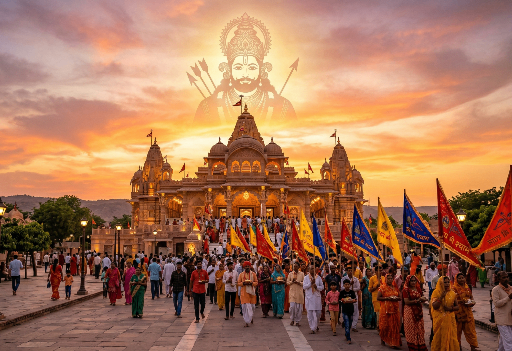
The Ram Mandir in Ayodhya is one of the most significant and historic temple constructions in India. Dedicated to Lord Ram, the temple stands at the birthplace of Lord Ram (Ram Janmabhoomi) and represents the culmination of a centuries-old cultural and legal journey. The magnificent temple was inaugurated on January 22, 2024, with the Pran Pratishtha (consecration) ceremony led by Prime Minister Narendra Modi.
Historical Background
The history of the Ram Mandir is deeply intertwined with India's cultural and religious heritage. The site in Ayodhya has been revered as the birthplace of Lord Ram for millennia. According to Hindu scriptures, Ayodhya was the capital of the Kosala kingdom and the birthplace of Lord Ram, the seventh avatar of Lord Vishnu.
The dispute over the site dates back to the 16th century when a mosque was constructed at the location believed to be Ram's birthplace. For centuries, Hindus continued to worship at the site, believing it to be the exact location of Ram's birth. The legal and social movement to reclaim the site gained momentum in the 1980s and 1990s, becoming a defining moment in modern Indian history.
The Supreme Court Verdict
On November 9, 2019, a five-judge Constitution Bench of the Supreme Court of India delivered a historic and unanimous verdict. The court ruled in favor of the construction of a Ram temple at the disputed site and directed the government to allocate an alternative 5-acre plot for the construction of a mosque. The judgment was hailed for its balanced approach, emphasizing that the wrongful act of demolishing the mosque should not be condoned while also acknowledging the Hindu belief that the site is the birthplace of Lord Ram.
The court established a trust, the Shri Ram Janmabhoomi Teerth Kshetra, to oversee the construction of the Ram Mandir.
Architecture and Design
The Ram Mandir is a masterpiece of traditional Nagara-style architecture, designed by the renowned architect Chandrakant Sompura and his son Ashish Sompura. Key architectural highlights include:
- Dimensions: The temple is 380 feet long, 250 feet wide, and 161 feet tall (including the spires).
- Floors: The temple has three floors, each dedicated to different aspects of Ram's life.
- Pillars: A total of 392 pillars adorn the temple, each intricately carved with depictions from the Ramayana.
- Doors: The temple features 44 doors, including the main entrance door made of rosewood and carved with exquisite designs.
- Material: The temple is constructed entirely of stone (Bansi Paharpur sandstone) without any iron or steel, ensuring longevity for thousands of years.
- Idol: The main deity is a 51-inch tall idol of Lord Ram in the form of a five-year-old child (Bal Ram), carved by sculptor Arun Yogiraj from Krishna Shila (black stone).
Key Features
- Garbhagriha (Sanctum Sanctorum): Houses the main idol of Lord Ram, along with idols of Sita, Lakshman, Hanuman, and other deities.
- Mandapas: Five mandapas (halls) — Nritya Mandap, Rang Mandap, Sabha Mandap, Prakrama Mandap, and Kirtan Mandap.
- Museum: A museum within the temple complex showcasing artifacts and exhibits related to the Ramayana and Ayodhya's history.
- Visitor Facilities: The temple complex can accommodate up to 100,000 devotees at a time, with modern amenities including parking, food courts, and medical facilities.
- Surroundings: The complex includes a 500-foot-long Ram Darbar, a 400-foot-long Hanuman Garhi, and a 300-foot-long Sita Rasoi.
The Pran Pratishtha Ceremony
The Pran Pratishtha (consecration) ceremony took place on January 22, 2024, in a grand event attended by thousands of dignitaries, saints, and devotees from across the world. Prime Minister Narendra Modi led the rituals, performing the main consecration ceremonies. The event was broadcast live globally, watched by millions.
The ceremony followed ancient Vedic traditions, with priests chanting mantras and performing yajnas (fire sacrifices) to invoke divine blessings. The auspicious timing was chosen based on astrological calculations by a panel of scholars.
Cultural and Religious Significance
The Ram Mandir is not just a religious structure but a symbol of India's cultural renaissance and civilizational pride. It represents:
- Faith: The culmination of a 500-year-long struggle of devotees who never gave up hope.
- Unity: A testament to India's ability to resolve complex issues through its democratic and judicial processes.
- Heritage: A showcase of India's ancient architectural traditions and artistic excellence.
- Spiritual Tourism: A major pilgrimage destination that is expected to boost tourism and the local economy in Ayodhya.
Economic and Social Impact
The Ram Mandir has transformed Ayodhya from a small town into a major spiritual tourism destination. The government has invested heavily in infrastructure development, including a new airport, railway station, expressway, and beautification of the Saryu riverfront. The city now receives millions of pilgrims annually, creating employment opportunities and boosting the local economy. Hotels, restaurants, and businesses have flourished, making Ayodhya one of India's fastest-growing pilgrimage cities.
Festivals and Celebrations
Major festivals celebrated at the Ram Mandir include:
- Ram Navami: The birth anniversary of Lord Ram, celebrated with grandeur and special rituals.
- Diwali: Ayodhya is famously known as the city where Lord Ram returned after 14 years of exile. The city celebrates Diwali with spectacular lighting and fireworks.
- Deepotsav: An annual festival where millions of diyas (earthen lamps) are lit on the banks of the Saryu River, setting a world record.
- Vivah Panchami: Celebrating the wedding of Lord Ram and Goddess Sita.
Visitor Information
The Ram Mandir is open to devotees from all faiths and backgrounds. There is no entry fee. Visitors are expected to follow the dress code and security guidelines. The temple is accessible by road, rail, and air, with Ayodhya now connected to major cities through direct flights and express trains.
Conclusion
The Ram Mandir stands today as a magnificent symbol of India's enduring faith, cultural heritage, and the strength of its democratic institutions. It is a place where millions find spiritual solace and inspiration. The temple, with its stunning architecture and profound spiritual significance, will continue to inspire generations to come and serve as a beacon of India's timeless civilizational values.
Jai Shri Ram!